You’ve got a few tabs open right now. Maybe three photographers, maybe five. They all have beautiful galleries. They all say they love dogs. They all promise a stress-free experience and images you’ll “treasure forever.”
And you’re sitting there thinking: OK, but how do I actually choose?
It’s a fair question—and a harder one than it should be, because most photographers make it genuinely difficult to compare them. Pricing is hidden. Processes are vague. The differences between a $300 session and a $3,000 investment aren’t explained anywhere, so you’re left guessing whether the gap is justified or just a number someone made up.
Here’s a framework for cutting through the noise, so you can make a decision you’ll feel good about, not just one you’ll second-guess for months.
Start with Specialization, Not Style
When all the portfolios look good, it’s tempting to just pick the aesthetic you like best, but style is the last thing you should be comparing because style can be imitated. Specialization can’t.
Ask yourself if this photographer’s entire business is built around pets, or if pets are just one item on a longer menu.
A photographer who shoots weddings on Saturdays, newborns on Tuesdays, and pets when someone asks is not the same as a photographer who has spent years or decades working exclusively with animals. The latter has handled a reactive Shepherd, a deaf senior beagle, and puppies who turn feral at the sight of a camera. The former has handled a lot of humans and occasionally a dog.

When you’re comparing options, look beyond the gallery thumbnails and ask yourself what percentage of this business is actually dedicated to pets.
Compare Processes, Not Just Packages
Most photographers list what you get: number of images, session length, and digital files included or not. What they don’t always explain is how you get there.
Process matters enormously. A clearly defined process is the difference between a session that feels disorganized and one that feels effortless. It’s the difference between a gallery you never do anything with and artwork that ends up above your fireplace.
When comparing photographers, ask each one, “Walk me through what happens from the moment I inquire to the moment I have my finished artwork in hand.” Then listen for specificity.
Does the process include a pre-session consultation to learn about your dog? A location recommendation based on his personality? Clear communication about what to expect on session day? An ordering appointment to help you select images and products? Or are you handed a gallery link and left to figure it out alone?
The photographers who can answer that question clearly, in detail, without hesitating—those are the ones who have actually thought about your experience, not just their own workflow.
Get Honest About the Full Investment
Here’s where comparison shopping gets uncomfortable: most photographers don’t publish their pricing, which makes side-by-side comparison nearly impossible.
Some hide pricing because they want to get you on a call before you see the numbers. Some hide it because the numbers are inconsistent. Some hide it because they haven’t fully figured out their own pricing yet.
A photographer who publishes clear pricing (session fee, product starting points, and a realistic average investment range) is doing you a favor. It means you can decide quickly whether it’s in your ballpark, without going through a whole discovery process only to find out it isn’t.
When pricing isn’t published, ask directly: What does the session fee include? Are products purchased separately? What do most of your clients invest in total? A straight answer is a good sign. Evasiveness is not.
Also worth asking: What’s the difference between your least expensive option and your most expensive? Understanding that range tells you a lot about the quality gap between entry-level and the full experience.
Look at the Products, Not Just the Images
This is the comparison most people skip…and it’s one of the most telling.
Any photographer can put images in an online gallery. What happens to those images after that is where things diverge significantly.
Some photographers offer digital files only. You get the images, you can do whatever you want with them, and the relationship is over. That sounds like a good deal until you realize that most of us don’t print anything, ever, and two years from now those files are buried in a folder you’ve forgotten about.
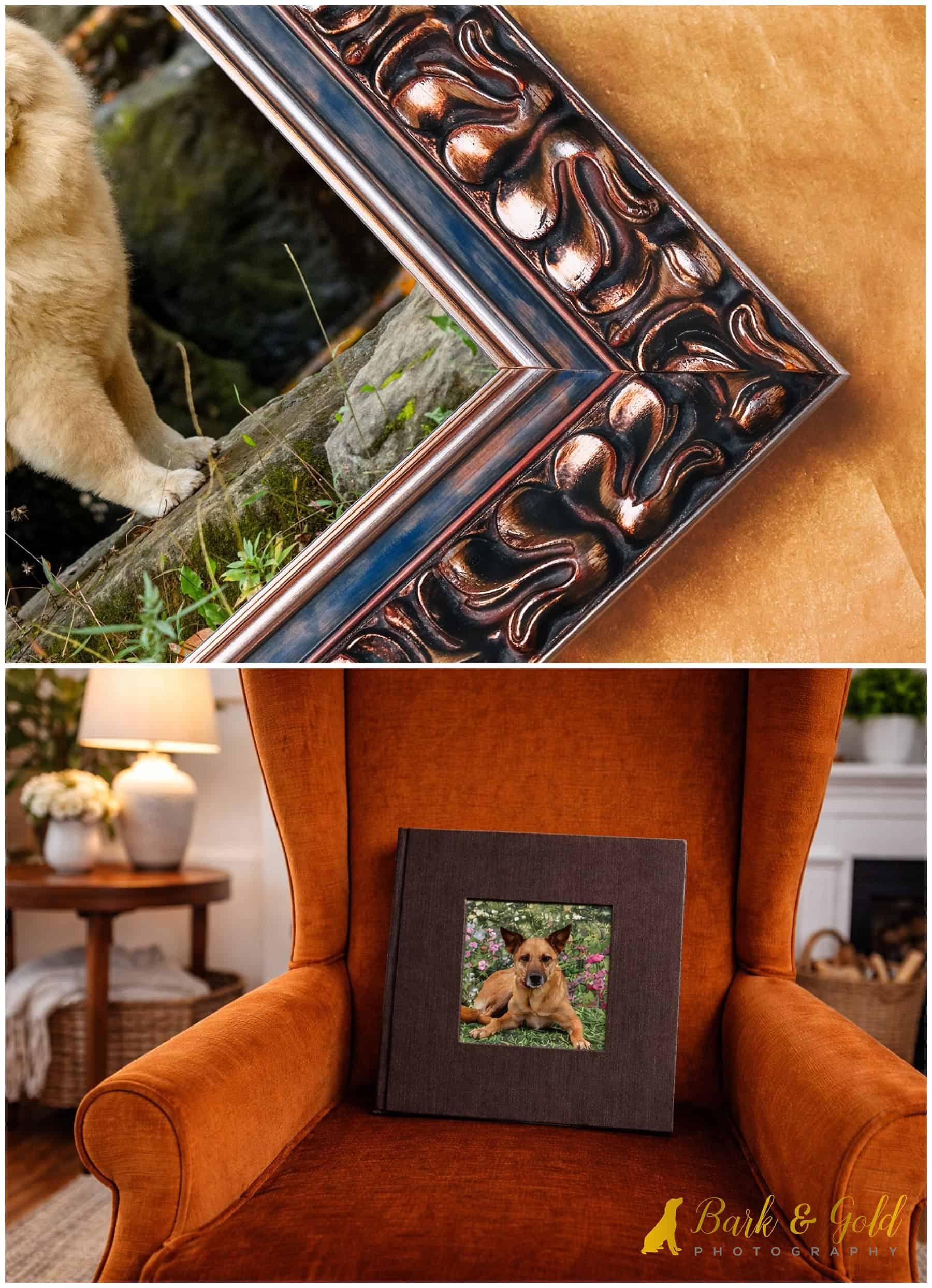
Others offer printed products, but “printed products” can mean anything from drugstore-quality prints to museum-grade wall art with hand-painted finishes and solid wood frames. These are not the same thing, and the gap in quality is visible. Ask to see examples of the physical products in person if you can. A photographer who is proud of their products will not hesitate to show them.
The question to ask: What do most of your clients end up with, and why? The answer will tell you whether their product offerings are an afterthought or a core part of what they do.
Check the Credentials, But Read Them Correctly
Awards, certifications, and press features are worth paying attention to, but not all credentials are created equal.
Being named “best of” on a listicle that anyone can pay to appear on is not the same as winning a competitive, juried award through a recognized professional organization. A certification from a respected industry body is not the same as a self-issued title. Featured in a local blog is not the same as featured in a national publication.
When you see credentials listed, it’s fair to ask—or Google—what they actually mean. The photographers who have earned significant recognition in their field will have credentials that hold up to a quick search. The ones who are padding a bio will have credentials that don’t.
Also worth noting: years in business matters. A photographer who has been doing this for a decade has seen things a photographer who started two years ago simply hasn’t. That experience shows up in the work, in the process, and in how they handle the unexpected.
Ask the Question Nobody Asks
Here’s one most people don’t think to ask, and it’s the most revealing question on this list: What happens if something goes wrong?
What if your dog has an off day and the images don’t turn out the way you hoped? What if the products arrive damaged? What if the location you chose ends up being wrong for your dog’s energy? What if you get to the ordering appointment and you don’t love what you see?
A photographer with a real process and real confidence in their work will have a real answer to this. They’ll tell you exactly how they handle it, because they’ve thought about it and probably handled it before. A photographer who gets vague or defensive when you ask this question is telling you something important.
The Gut Check at the End
After you’ve done all of this—compared the specialization, the process, the pricing, the products, and the credentials—you’ll probably have a pretty clear frontrunner. But here’s the final filter: Does this photographer seem like someone who actually cares about the outcome for you and your dog specifically, or do they seem like someone who is good at booking clients?
There’s a difference. One photographer is thinking about what ends up on your wall. The other is thinking about what ends up on their calendar. Both will get you to a session. Only one will get you to something worth keeping. That’s the one worth hiring.
If you’re comparing pet photographers in Pittsburgh and want to understand exactly what the Bark & Gold experience includes, from first inquiry to final artwork delivery, I’m happy to walk you through it.